
Introduction
High-functioning anxiety symptoms present a unique challenge in mental health: they often manifest alongside exceptional professional achievement and social capability, making them difficult to identify and address. Many individuals experiencing these symptoms maintain impressive careers and active social lives while privately managing persistent anxiety, imposter syndrome, and overwhelming thoughts. This dichotomy between external success and internal struggle creates a significant barrier to recognition and treatment of high-functioning anxiety that makes it a psychological phenomenon worthy of examination, beyond just a buzzword diagnosis.
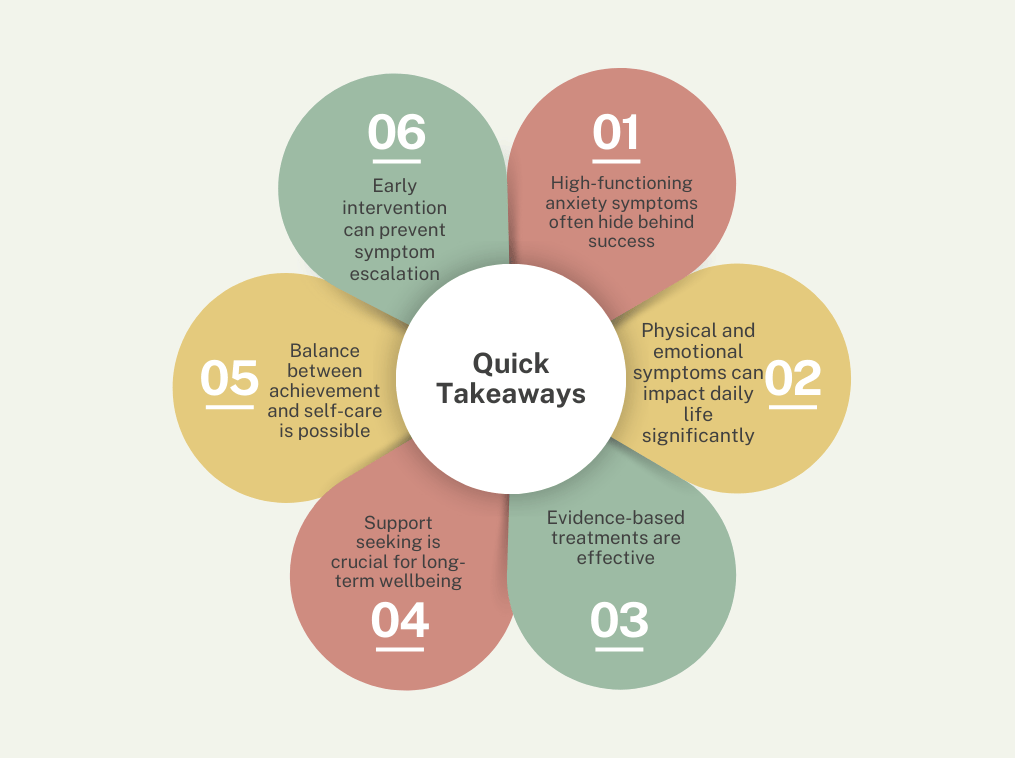
A unique aspect of high-functioning anxiety that’s rarely discussed is its potential role as both a catalyst and a constraint. While traditional narratives often focus on anxiety purely as a limitation, research suggests that some individuals have developed sophisticated adaptation mechanisms that transform their anxiety-driven traits into professional advantages. For instance, the heightened risk assessment common in anxiety can lead to more thorough strategic planning, while the fear of negative outcomes often results in exceptional preparation. However, this adaptation comes at a personal cost: these individuals often struggle to recognise the difference between productive motivation and harmful anxiety, leading to a complex relationship with their own success. Understanding this duality is crucial for developing management strategies that preserve the motivational aspects while reducing the psychological burden.
What Are the Common Signs of High-Functioning Anxiety You Might Be Missing?
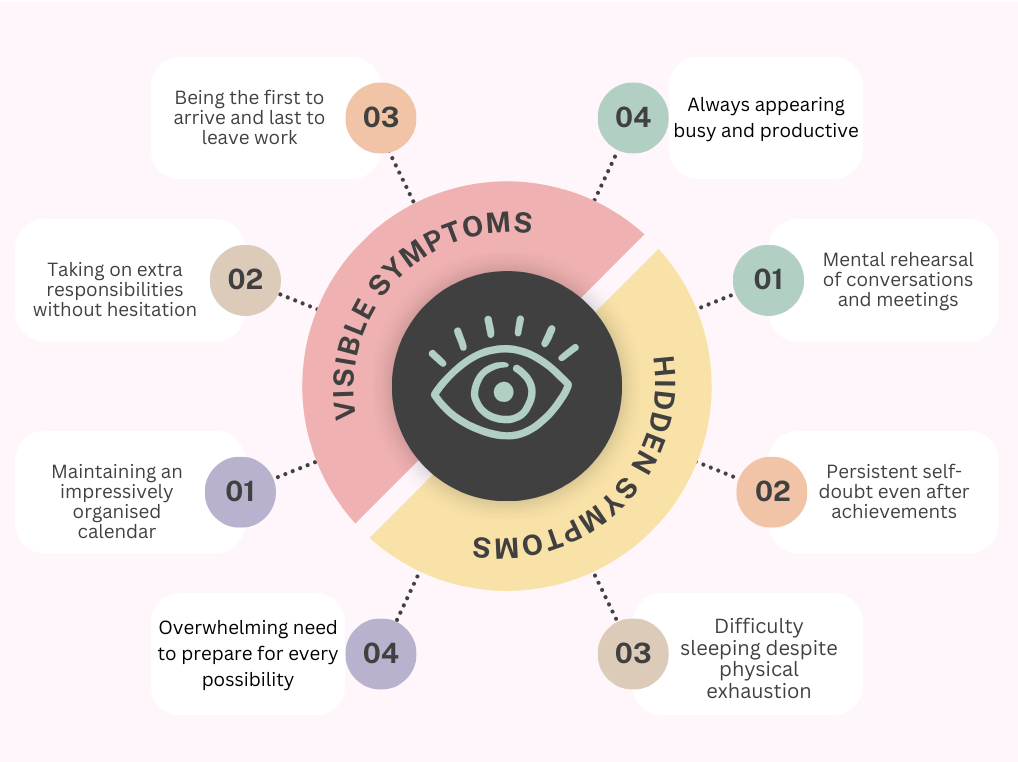
Many people don’t realise they’re experiencing high-functioning anxiety because its symptoms often masquerade as positive traits. Let’s explore what these symptoms might look like in your daily life:
“…every time I didn’t embarrass myself—or even excelled—I believed that I had fooled everyone yet again. One day soon, the jig would be up.” Sheryl Sandberg, former COO of Meta (Facebook).
How Does High-Functioning Anxiety Impact Your Daily Life?
Understanding how high-functioning anxiety affects your everyday experiences can help you recognise when it’s time to seek support. While anxiety disorders affect approximately 13% of Australians annually, anxiety in high achievers is more difficult to identify and, therefore, high-functioning anxiety may be significantly more prevalent due to underreporting.
Impact on Professional Life:
- Constantly checking work emails outside office hours
- Difficulty delegating tasks
- Overworking to prevent perceived failures
- Excessive proof-reading and double-checking work
- Challenges maintaining work-life boundaries
Effect on Personal Relationships:
- Finding it hard to say “no” to requests
- Mental presence vs. physical presence in social situations
- Persistent worry about others’ judgments
- Difficulties in intimate relationships due to perfectionism
Understanding the Triggers of High-Functioning Anxiety
Understanding what triggers high-functioning anxiety is crucial for developing effective management strategies. The triggers often fall into two interrelated categories: environmental and personal factors, which frequently work in concert to exacerbate symptoms.
Environmental triggers
These commonly stem from our modern lifestyle and societal pressures. High-pressure work environments, where success is constantly measured and evaluated, can create a persistent state of alertness and worry. This is often compounded by demanding family responsibilities, where the need to perform well in multiple roles creates additional stress. The pervasive nature of social media adds another layer of complexity, as constant comparison with others’ curated successes can reinforce feelings of inadequacy. Financial pressures, whether real or anticipated, can further intensify these anxiety patterns.
Personal risk factors
These often have deeper roots in our individual histories and genetic makeup. A family history of anxiety disorders can create both biological predisposition and learned response patterns. Perfectionist tendencies developed in childhood, often in response to high expectations or praise for achievement, can become deeply ingrained behavioural patterns. Past experiences of criticism or failure may leave lasting impressions that shape how we approach challenges, while certain personality traits, particularly high conscientiousness, can make us more susceptible to anxiety-driven behaviours.
Effective Management Strategies for High-Functioning Anxiety
Managing high-functioning anxiety requires a balanced approach that acknowledges both immediate needs and long-term growth. Rather than completely dismantling the traits that have contributed to your success, the goal is to develop healthier ways to maintain achievement while prioritising your wellbeing.
Immediate coping strategies can provide relief during challenging moments. Brief mindfulness practices, such as two-minute desk meditation breaks, can help reset your nervous system during busy workdays. The 5-4-3-2-1 grounding exercise, which engages all your senses, can be discretely performed during meetings to manage anxiety spikes. Mindful walking between tasks offers both physical movement and mental reset opportunities, helping to break the cycle of rushing from one responsibility to another.
For sustainable change, long-term management approaches are essential. Evidence-based Cognitive Behavioral Therapy (CBT) techniques can help restructure anxiety-producing thought patterns while maintaining productive motivation. Establishing regular exercise and sleep routines builds resilience against stress, while professional support and counselling provide ongoing guidance and accountability. Implementing workplace wellbeing strategies, such as setting boundaries and practicing strategic breaks, helps create a more sustainable approach to achievement.
Beginning Your Journey to Better Management
Starting to manage high-functioning anxiety doesn’t require dramatic life changes. Begin with developing awareness of your anxiety patterns and their impact on your daily life. Choose one small, manageable change to implement, such as a daily five-minute mindfulness practice or setting one firm boundary around work hours. Practice self-compassion throughout this process, recognising that change is gradual and setbacks are normal. When needed, don’t hesitate to seek professional support – it’s a sign of strength, not weakness, to utilise available resources for your mental health journey.
Beyond Blue – Anxiety Support Services
Conclusion: Your Next Steps in Managing High-Functioning Anxiety
Living with high-functioning anxiety doesn’t mean you have to continue masking your struggles behind achievement. While these symptoms might have driven some of your successes, acknowledging their impact on your wellbeing is the first step toward finding a more balanced way of living.
If you’ve recognised yourself in this article, remember: seeking support isn’t a sign of weakness – it’s a demonstration of self-awareness and strength. You deserve to maintain your achievements while feeling calm and confident inside.
Helpful Resources:
- Beyond Blue – Anxiety Support Services
- Black Dog Institute – Mental Health Research
- headspace – Youth Mental Health Services
- Queensland Health – Caring for a person experiencing an Anxiety disorder
Note: This article is for informational purposes only and should not replace personalised professional psychological advice. If you’re experiencing symptoms of anxiety, please consult with a qualified healthcare provider.

You must be logged in to post a comment.